Violence Against Women and Girls
Violence Against Women and Girls (VAWG) is a matter of priority for Northamptonshire Police.
We want all women and girls who live, work, socialise or study in Northamptonshire to not only be safe, but feel safe, whether that is in public spaces, at home or online.
Women and girls should be able to live confidently, without feeling frightened, intimidated, or harassed.
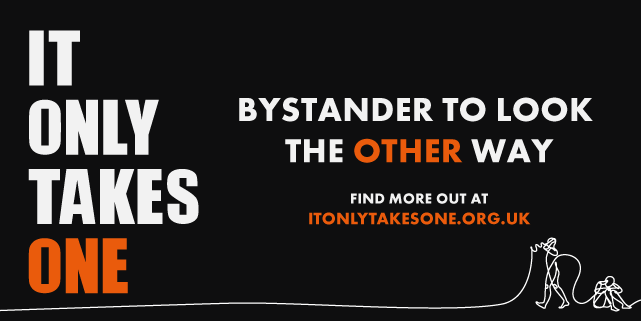
We are supporting a county wide campaign called ‘It Only Takes One’ which aims to highlight the issues, share information with our communities, and encourage bystanders to call out and challenge abusive behaviours. And ultimately reduce incidents of violence, harassment, and abuse.
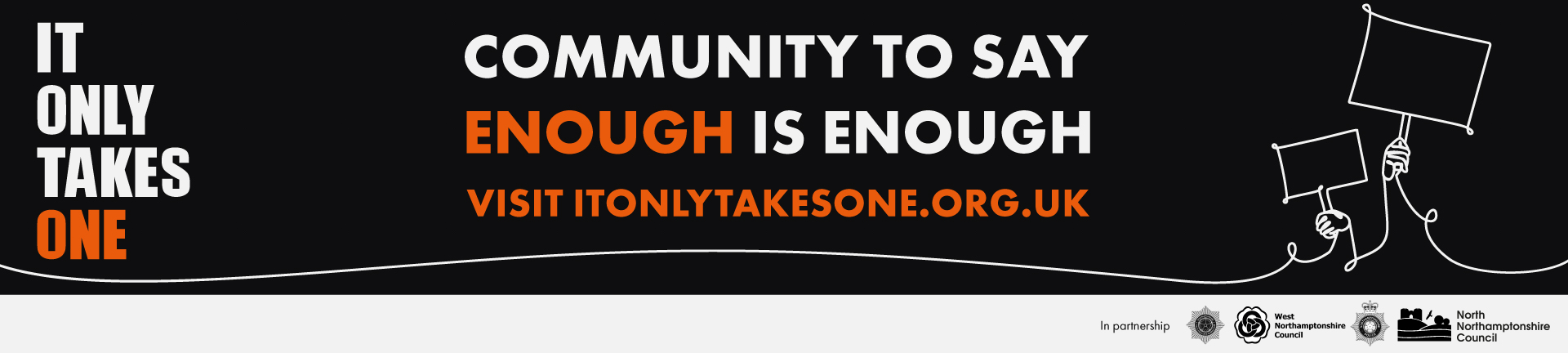
We are also supporting the national Home Office VAWG campaign called ENOUGH.
More information is available at www.itonlytakesone.org.uk and www.enough.campaign.gov.uk
Women are disproportionately affected by violence and abuse
Women and girl’s experience of harassment and abuse is all too common. Many have experienced problematic behaviours at some point or another. Some have been threatened, intimidated, controlled or coerced – making them feel vulnerable and unsafe.
Whether this is being cat-called in the street, leered at on the bus, groped on a night out, sent unwanted naked pictures online, or being closely controlled by a partner. No-one should live in fear of this type of abuse or harassment.
Violence against women and girls is an umbrella term used to cover a wide range of abuses against women and girls such as domestic homicide, domestic abuse, sexual assault, abuse experienced as a child, female genital mutilation (FGM), forced marriage and harassment in work and public life.
While men and boys also suffer from many of these forms of abuse, they disproportionately affect women and girls.
Northamptonshire Police has developed a Violence Against Women and Girls Strategy which sets out how the Force plans to tackle this as a matter of priority. A HTML version of strategy is also available to read.
Abusive behaviours must stop
Any behaviour that embarrasses, demeans, frightens or distresses women and girls is abuse. And it must stop.
This abuse can be emotional, physical, sexual or financial. It can be words or actions. It can be online or in person. At home, at work, or in the street.
It can be inflicted by a partner, ex-partner, family member, colleague, friend or stranger.
These are just some examples. Whatever form it takes, abuse should never be justified as ‘an act of love’ or dismissed as ‘harmless fun.’
When abuse towards women and girls goes unchecked, it becomes normalised. If the people who carry out this behaviour think it’s normal or even acceptable, the abuse can escalate. Women may go on to suffer even more serious violence and trauma.
If something’s happened to you or someone you know, or you fear something might happen, or you are aware a crime has been committed please contact us on 101, or 999 in an emergency.
Operation Kayak
Operation Kayak is a proactive policing operation launched by the Force to reduce predatory behaviours.
Op Kayak is operational on Friday and Saturday evenings and on student night (usually Wednesdays).
Officers involved in Op Kayak aim to improve night-time safety by looking out for and intervening to stop potentially predatory behaviour, including loitering, leering, following lone and/or vulnerable individuals, harassment, and sexual violence.
It’s up to all of us to say this is not okay
Acts that some people see as ‘trivial’ or ‘harmless fun’ need to be challenged.
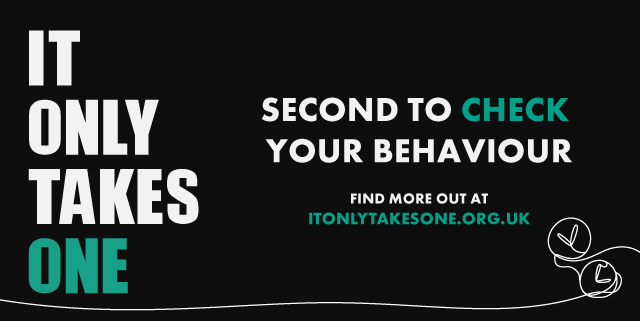
It’s up to all of us to challenge this and say this is not okay.
By standing against all forms of abuse, and by holding perpetrators accountable, we can create a society where women and girls are equal, respected, and safe.
The safety and wellbeing of women and girls is everyone’s business. The responsibility is on all of us to call out problematic behaviour, not just those affected by it.
Be an active bystander
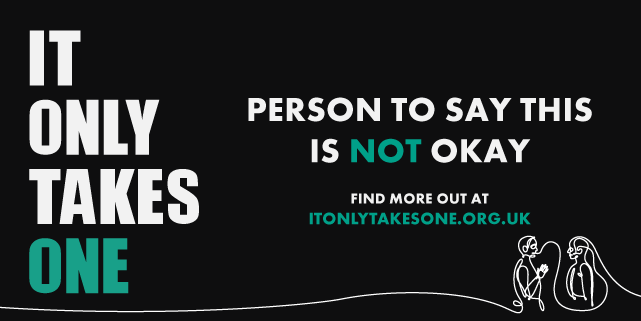
If you see or hear abusive or harmful behaviour, there are various ways you can help.
Being an active bystander is something we can all do. Whether it’s happening to a friend, a family member, a colleague, or a stranger. If it’s in person or online.
Taking the time to call out someone’s problematic behaviour or check if someone is okay can just take a minute but can make a huge difference to that person’s experience.
You’ll find it easier to react safely and calmly when the moment comes, if you have some strategies prepared in advance. There is more information on the Enough site to help you determine whether it is safe to step in and intervene.
If you see abuse and you don’t feel it’s safe or appropriate for you to intervene, you can involve others – whether it’s a member of staff, a supervisor, security or the police.
Call us on 101. Remember, in an emergency call 999.
If it’s unsafe to speak, you can then press 55 and you will be transferred to a police call handler trained to deal with ‘silent calls’.
The more people speak up, the better we can prevent sexual harassment and assault, reduce stigma, and tackle misconceptions.
Speak up, make a difference. Together we can create a safer community.